About Taena

Physician-led Habesha health blog debunking myths with respectful, science-based guidance you can trust daily.
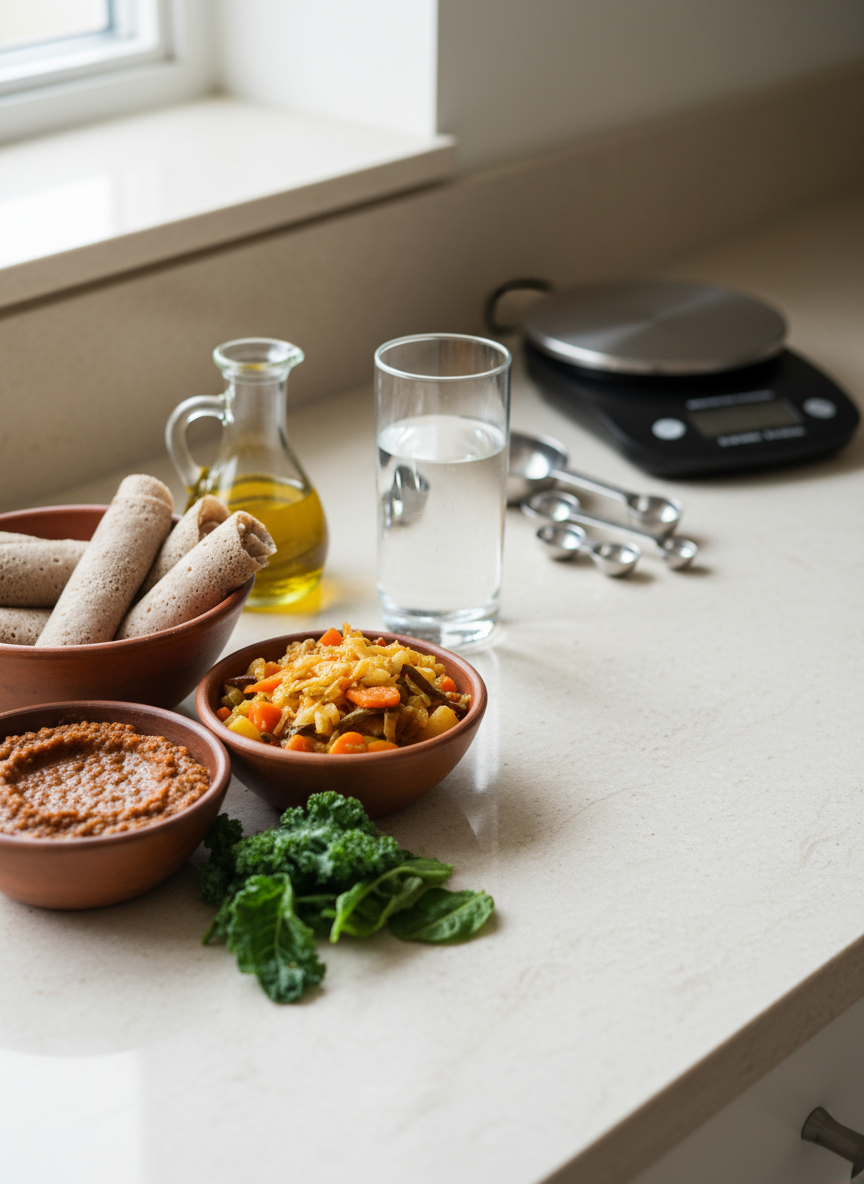

A close-up photograph of a kitchen counter prepared for a myth-debunking article about traditional versus modern nutrition. On a smooth, light stone surface, small clay bowls hold injera pieces, lentils, and spiced vegetables, carefully arranged beside olive oil, fresh leafy greens, and a glass of water. In the background, slightly out of focus, are modern measuring spoons and a digital kitchen scale, symbolizing evidence-based dietary guidance. Soft daylight from a side window creates natural highlights on the food’s textures and faint shadows behind each object. The composition follows the rule of thirds, with a balanced, clean, and modern aesthetic. The atmosphere feels practical yet culturally rooted in Ethiopian cuisine, emphasizing clarity over superstition without any human presence.
A photographic top-down view of a tidy home workspace used for researching and debunking health myths in the Habesha diaspora. A slim, modern tablet lies centered on a natural wood table, displaying a blank, softly glowing screen. Surrounding it are color-coded sticky notes without text, a closed medical reference book, and a small globe subtly turned toward the Horn of Africa. Nearby, a ceramic cup of dark buna coffee rests on a woven coaster inspired by traditional Ethiopian patterns. Diffused afternoon light from an unseen window gives the scene a gentle, even illumination with minimal shadows. The mood is focused, organized, and scholarly, suggesting rigorous fact-checking. Photographic realism with sharp focus throughout, minimalist and professional composition.

Why Taena Exists For You

Taena is led by an Ethiopian physician who understands both traditional beliefs and modern medicine, offering clear, culturally grounded answers that correct myths, prevent harm, and help Habesha families live longer, healthier, more confident lives worldwide.

Clinical Team

A neatly arranged wooden desk displaying a physician’s tools for myth-busting health information: an open laptop showing a blank, clean browser window, a stethoscope coiled beside a stack of well-used medical textbooks, and a ceramic Ethiopian coffee cup with a subtle traditional pattern. The desk sits near a bright apartment window overlooking a soft-focus modern city. Mid-morning natural light pours in, casting gentle, realistic shadows and crisp highlights on metal and paper. Photographic realism, shot at eye level with a shallow depth of field so the foreground objects are sharp while the background blurs. The mood is professional, calm, and trustworthy, suggesting careful, evidence-based Habesha wellness guidance without any visible people or text.

Aarav Sharma

CEO

Lead physician, Ethiopian-trained and US-board-certified, translating complex research into clear, practical guidance.

A close-up photograph of a kitchen counter prepared for a myth-debunking article about traditional versus modern nutrition. On a smooth, light stone surface, small clay bowls hold injera pieces, lentils, and spiced vegetables, carefully arranged beside olive oil, fresh leafy greens, and a glass of water. In the background, slightly out of focus, are modern measuring spoons and a digital kitchen scale, symbolizing evidence-based dietary guidance. Soft daylight from a side window creates natural highlights on the food’s textures and faint shadows behind each object. The composition follows the rule of thirds, with a balanced, clean, and modern aesthetic. The atmosphere feels practical yet culturally rooted in Ethiopian cuisine, emphasizing clarity over superstition without any human presence.

Mateo García

CTO

Registered dietitian specializing in Habesha foods, balancing cultural traditions with evidence-based nutrition advice.

A photographic top-down view of a tidy home workspace used for researching and debunking health myths in the Habesha diaspora. A slim, modern tablet lies centered on a natural wood table, displaying a blank, softly glowing screen. Surrounding it are color-coded sticky notes without text, a closed medical reference book, and a small globe subtly turned toward the Horn of Africa. Nearby, a ceramic cup of dark buna coffee rests on a woven coaster inspired by traditional Ethiopian patterns. Diffused afternoon light from an unseen window gives the scene a gentle, even illumination with minimal shadows. The mood is focused, organized, and scholarly, suggesting rigorous fact-checking. Photographic realism with sharp focus throughout, minimalist and professional composition.

Zuri Ndlovu

Engineer

Public health researcher focusing on Ethiopian communities, turning data into accessible stories about prevention.

A neatly arranged wooden desk displaying a physician’s tools for myth-busting health information: an open laptop showing a blank, clean browser window, a stethoscope coiled beside a stack of well-used medical textbooks, and a ceramic Ethiopian coffee cup with a subtle traditional pattern. The desk sits near a bright apartment window overlooking a soft-focus modern city. Mid-morning natural light pours in, casting gentle, realistic shadows and crisp highlights on metal and paper. Photographic realism, shot at eye level with a shallow depth of field so the foreground objects are sharp while the background blurs. The mood is professional, calm, and trustworthy, suggesting careful, evidence-based Habesha wellness guidance without any visible people or text.

Leila Haddad

Designer

Medical editor ensuring every article is accurate, up to date, and medically responsible.

Story

Too many Habesha families rely on hearsay, imported fads, or fear instead of facts. Taena examines common myths respectfully, explains what research actually shows, and offers practical steps that fit our culture, kitchens, and day‑to‑day realities.

A close-up photograph of a kitchen counter prepared for a myth-debunking article about traditional versus modern nutrition. On a smooth, light stone surface, small clay bowls hold injera pieces, lentils, and spiced vegetables, carefully arranged beside olive oil, fresh leafy greens, and a glass of water. In the background, slightly out of focus, are modern measuring spoons and a digital kitchen scale, symbolizing evidence-based dietary guidance. Soft daylight from a side window creates natural highlights on the food’s textures and faint shadows behind each object. The composition follows the rule of thirds, with a balanced, clean, and modern aesthetic. The atmosphere feels practical yet culturally rooted in Ethiopian cuisine, emphasizing clarity over superstition without any human presence.