Myth Library

Browse every myth we’ve tackled, organized by topic, symptom, and everyday Habesha concerns.
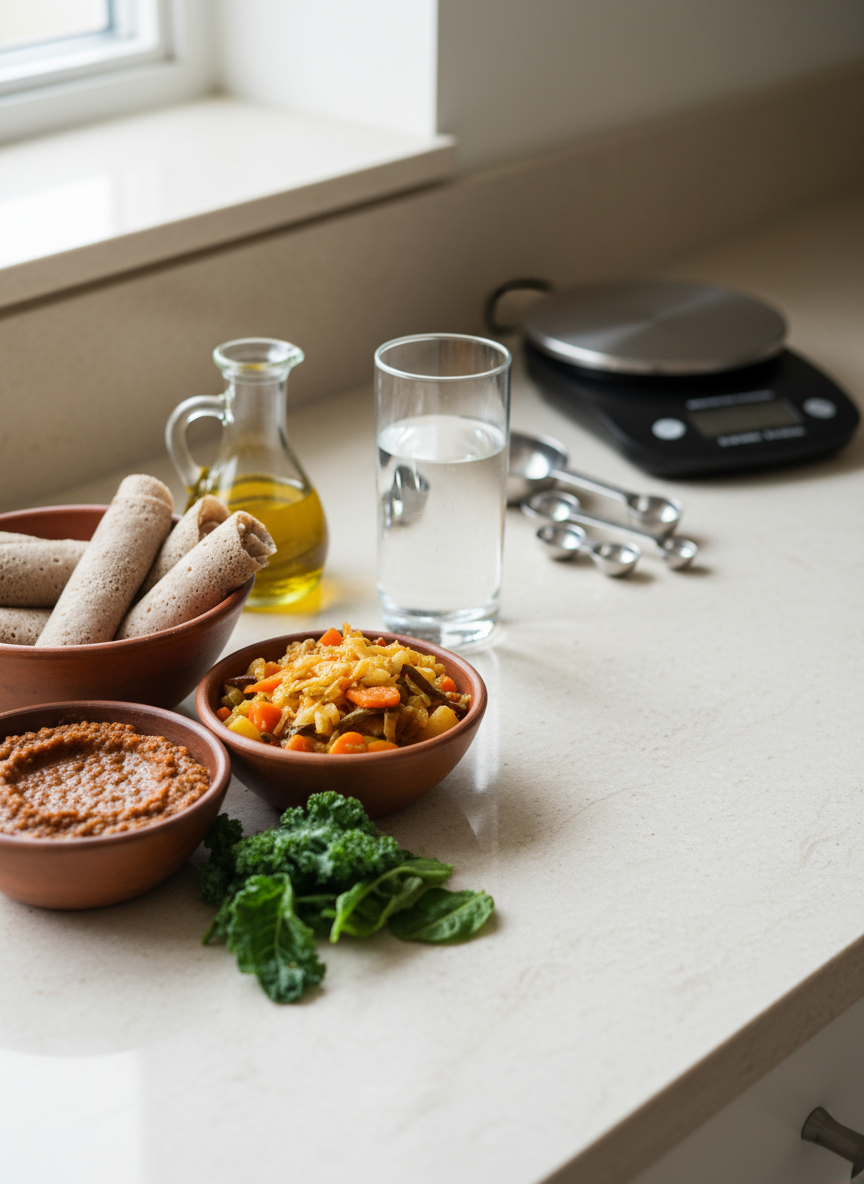
A close-up photograph of a kitchen counter prepared for a myth-debunking article about traditional versus modern nutrition. On a smooth, light stone surface, small clay bowls hold injera pieces, lentils, and spiced vegetables, carefully arranged beside olive oil, fresh leafy greens, and a glass of water. In the background, slightly out of focus, are modern measuring spoons and a digital kitchen scale, symbolizing evidence-based dietary guidance. Soft daylight from a side window creates natural highlights on the food’s textures and faint shadows behind each object. The composition follows the rule of thirds, with a balanced, clean, and modern aesthetic. The atmosphere feels practical yet culturally rooted in Ethiopian cuisine, emphasizing clarity over superstition without any human presence.
A photographic top-down view of a tidy home workspace used for researching and debunking health myths in the Habesha diaspora. A slim, modern tablet lies centered on a natural wood table, displaying a blank, softly glowing screen. Surrounding it are color-coded sticky notes without text, a closed medical reference book, and a small globe subtly turned toward the Horn of Africa. Nearby, a ceramic cup of dark buna coffee rests on a woven coaster inspired by traditional Ethiopian patterns. Diffused afternoon light from an unseen window gives the scene a gentle, even illumination with minimal shadows. The mood is focused, organized, and scholarly, suggesting rigorous fact-checking. Photographic realism with sharp focus throughout, minimalist and professional composition.

Method

We choose myths our Habesha community actually asks about, review global and Ethiopian research, and translate it into clear explanations. Nothing here replaces personal medical care—it’s guidance to discuss with your own clinician.